Broomfield's EV Charging Fee Assumes You Have a Driveway
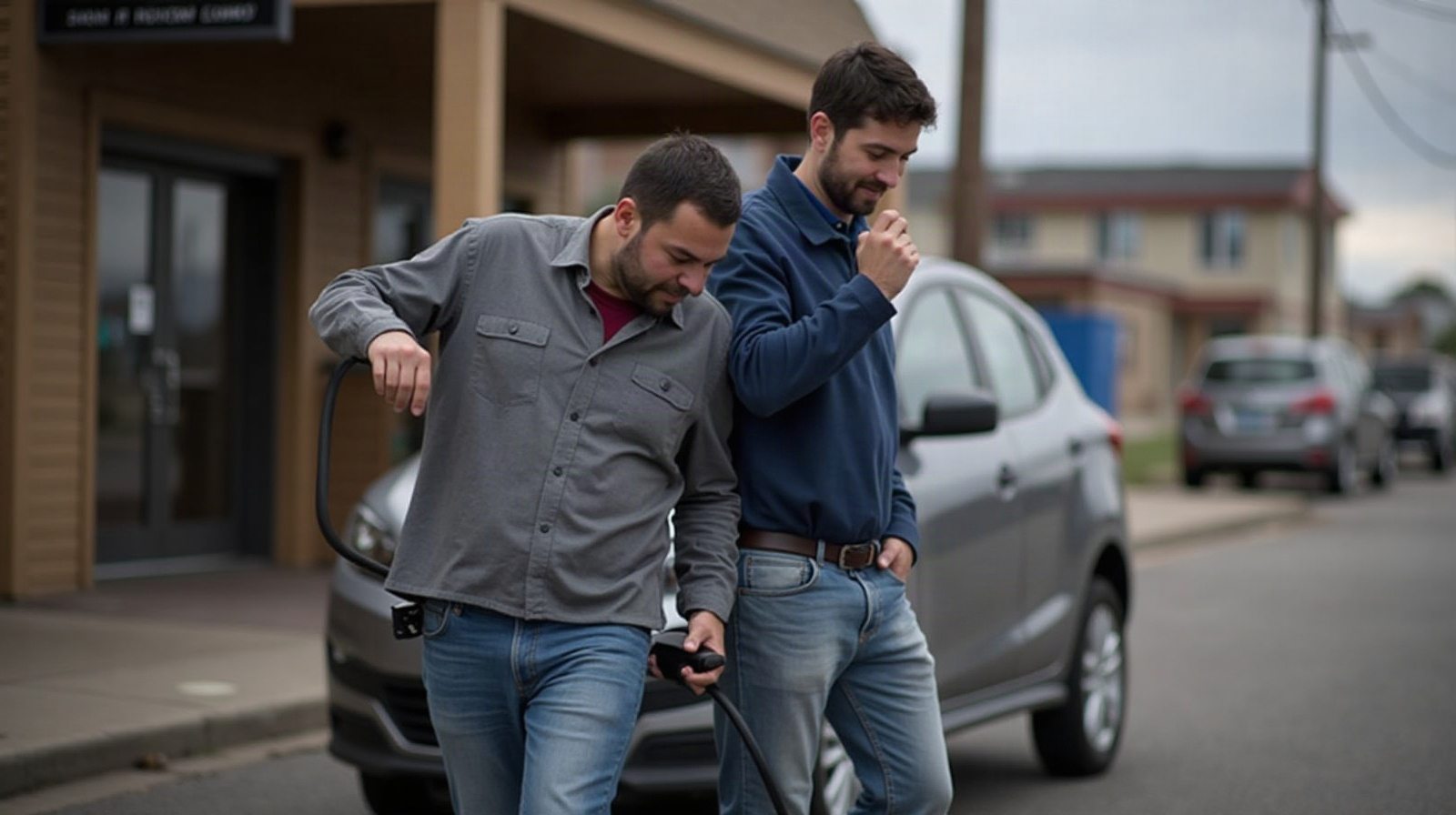
When the Broomfield City Council adopts its new fee structure for electric vehicle charging stations on city property this week, the number that will draw attention is 25 cents per kilowatt-hour, charged between 5 p.m. and 5 a.m. It sounds like a technical footnote, the kind of line item that exists to keep the city's books balanced as it builds out charging infrastructure. But rate design is never just accounting. It encodes an assumption about who the driver is, when they charge, and why. And the assumption baked into this schedule, cheaper power overnight, is one that quietly excludes a growing share of the people Broomfield is building housing for.
The logic of off-peak pricing comes straight from the utility playbook: shift demand away from the hours when the grid is strained, reward people who can wait. Xcel Energy has used versions of this for years to nudge dishwashers and water heaters into the middle of the night. Applied to home charging, it makes sense. A homeowner plugs in after dinner, the car sips electricity while the household sleeps, and by morning the tank is full and the grid never noticed. Applied to a public charging station, the logic gets shakier, because it presumes the driver has a choice about when to plug in, and that presumption depends entirely on where they live.
Broomfield is not the suburb it was twenty years ago. The corridors around Baseline and Uptown have filled in with apartments, townhomes, and multifamily developments built at exactly the density the city has spent the last decade encouraging, in part because it is the only way to keep housing even nominally attainable. Many of those units do not come with a garage, a driveway, or a dedicated outlet. For a resident in one of those buildings, a public charger on city property is not a backup option for road trips. It is the only outlet they have. And their charging schedule is not set by convenience, it is set by whatever slot the parking lot happens to be open: a lunch break, an errand run, a stretch of time between dropping kids off and picking them up, all squarely inside the daytime hours the fee structure is designed to discourage.
The council's schedule effectively charges a premium to the residents least likely to own a garage, and a discount to those most likely to have one. That is not a deliberate act of unfairness. It is what happens when a policy tool designed for single-family homeowners gets applied city-wide without asking whether the underlying assumption still holds. The city is not doing anything unusual here. Most municipal EV rate schedules borrow the same off-peak template, because it is the one that already exists in utility rate books and because grid strain is a real and legitimate concern. But legitimate concerns can still produce policies that land unevenly, and a city that has spent real political capital building denser, more affordable housing stock has an obligation to check whether its other ordinances undercut that same population.
There is an irony worth sitting with. Broomfield's push toward multifamily housing has been justified, in part, on environmental grounds: density means less sprawl, shorter drives, more efficient land use. Electric vehicle adoption gets justified on the same grounds. Yet the fee structure meant to encourage EV charging quietly disadvantages exactly the residents whose housing choices already align with the city's stated climate goals. The homeowner with a driveway in a low-density neighborhood gets the cheap rate by default, simply by charging at home. The renter in a transit-oriented development, doing everything the city's land use plan wants, pays more to use the public charger the city built for people like them.
None of this requires scrapping time-of-use pricing. It requires the council to ask a more specific question before adopting the next fee schedule: who actually uses this charger, and when. A quick audit of usage patterns at Broomfield's existing public stations would answer that in a season. If daytime use turns out to be concentrated among residents without home charging access, a flat rate, or a modest daytime discount at high-density sites, would cost the city little and would bring the policy in line with the housing reality it has already chosen to build.