Every Search Query Makes Heat, and Broomfield Just Noticed
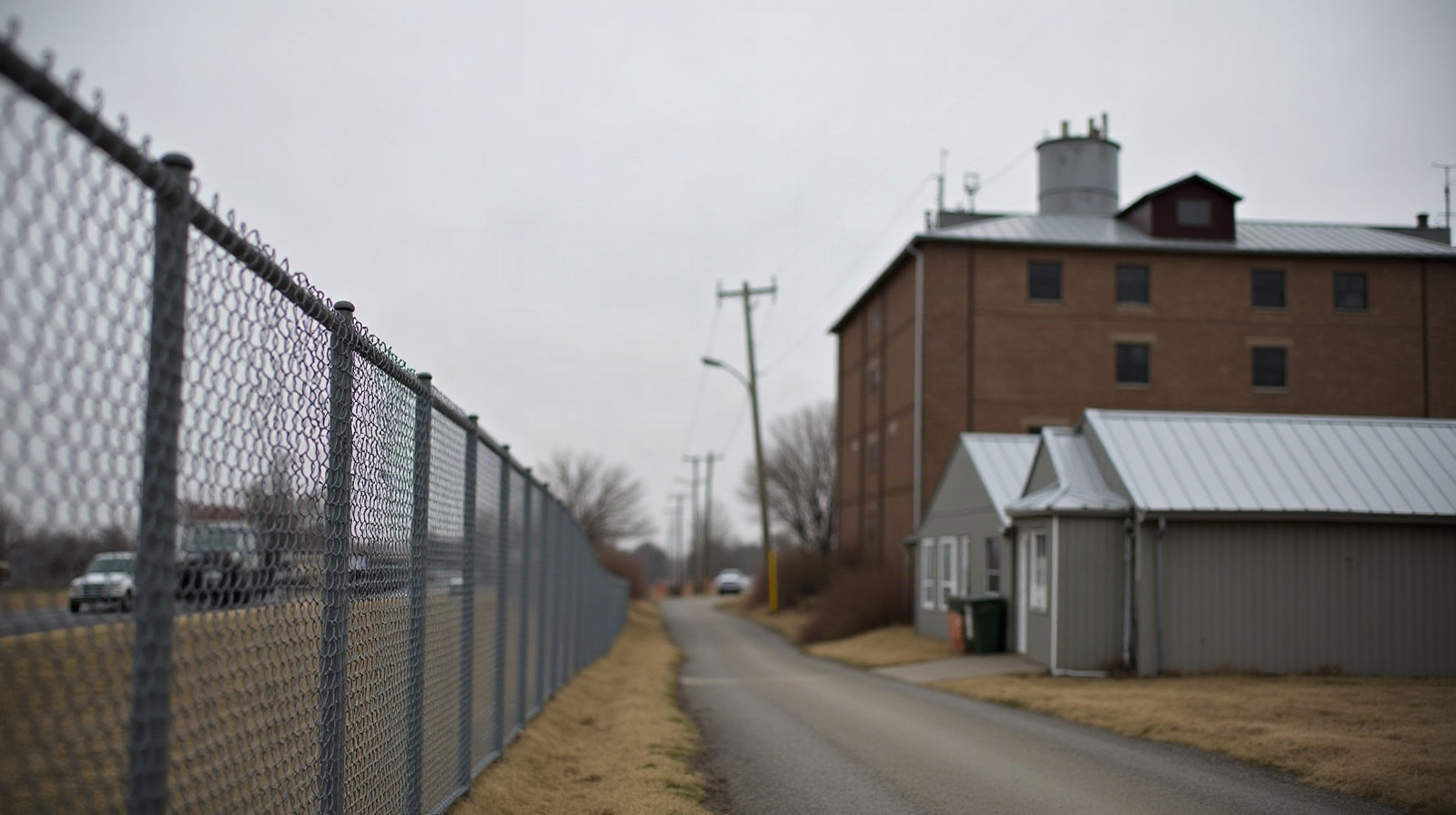
There's a particular kind of building that looks almost deliberately boring: low, windowless, ringed by chain-link fence and humming quietly behind a berm off the highway. No sign says what's inside. No smell, no smoke, nothing to catch the eye. And yet that building can draw as much electricity as a small city and, depending on how it's built, drink water like one too.
That's a data center, and Broomfield's City Council is about to hit pause on them. Ordinance No. 2313, up for a second reading this week, would impose an 18-month moratorium on new data center construction while the city figures out what rules should even apply. Right now there aren't any specific to this kind of facility. That gap is worth sitting with for a moment, because the physics of what these buildings do is more interesting than the zoning language suggests.
Start with a basic fact of electrical engineering: almost every watt that goes into a computer chip comes back out as heat. Unlike, say, a car engine, where a chunk of the fuel's energy actually moves the wheels, a server doing calculations isn't producing motion or light in any meaningful amount. It's just pushing electrons around tiny transistors, and nearly all of that energy degrades into waste heat almost immediately. So a data center's power bill and its cooling problem are, in a rough sense, the same number twice. If a facility draws 20 megawatts to run its servers, it needs to get rid of roughly 20 megawatts of heat, every hour, all year, or the equipment cooks itself.
That's where water comes in. Some data centers cool themselves with big electric chillers, essentially industrial-scale air conditioners, which just shifts more of the burden onto the electric grid. Others use evaporative cooling towers, the same principle as sweating: water absorbs heat as it evaporates, and the vapor carries that heat away into the sky. It's efficient and cheap, but it consumes real water, sometimes hundreds of thousands or even millions of gallons a day for a large facility, depending on design, climate, and how hard the servers are working. On Colorado's Front Range, where reservoir levels and snowpack numbers get discussed as casually as sports scores, and where Broomfield's own council agenda regularly includes a drought status update, that's not a trivial detail to leave unregulated.
None of this means a given data center proposal for Broomfield would be a water hog or a grid-buster. Estimates for power and water use vary enormously depending on what the facility actually does. A modest facility storing backup files draws far less than one training large artificial intelligence models, which pack in power-hungry graphics processors and can pull several times the electricity of a conventional server room doing routine computing. The industry itself is shifting fast, with some newer buildings using closed-loop liquid cooling that recirculates coolant instead of evaporating water at all. That variability is precisely the problem a blanket “yes” or “no” rule can't handle. It's also why an outright ban would arguably be the wrong instrument. What the moratorium buys is time: eighteen months for planners to ask a developer proposing a facility how many megawatts it needs, how it plans to shed heat, and whether Xcel Energy, whose franchise agreement for gas and electric service is on the very same agenda, can supply that load without straining everyone else's grid.
It's a small irony that the infrastructure making modern life feel weightless, cloud storage, video calls, an AI assistant answering a question in half a second, rests on some very unglamorous thermodynamics: heat has to go somewhere, and in a semi-arid region, “somewhere” sometimes means the water table. Broomfield isn't alone in scrambling to write rules after the technology arrived rather than before. Municipalities across the country are having the same conversation right now, mostly for the same reason: nobody wrote a zoning code, ten or twenty years ago, that assumed a windowless building down the road might need as much water as a golf course and as much power as a stadium, running 24 hours a day, invisible from the sidewalk.